
Safe in pregnancy? · Foods
Dates during pregnancy: are dates safe in the first months and the ninth month?
A clear guide from the Nawah team explaining the safety of eating dates in every month of your pregnancy, your daily portion, and when to cut back. Written by the Nawah team using verified medical sources, without clinical authorship or review.
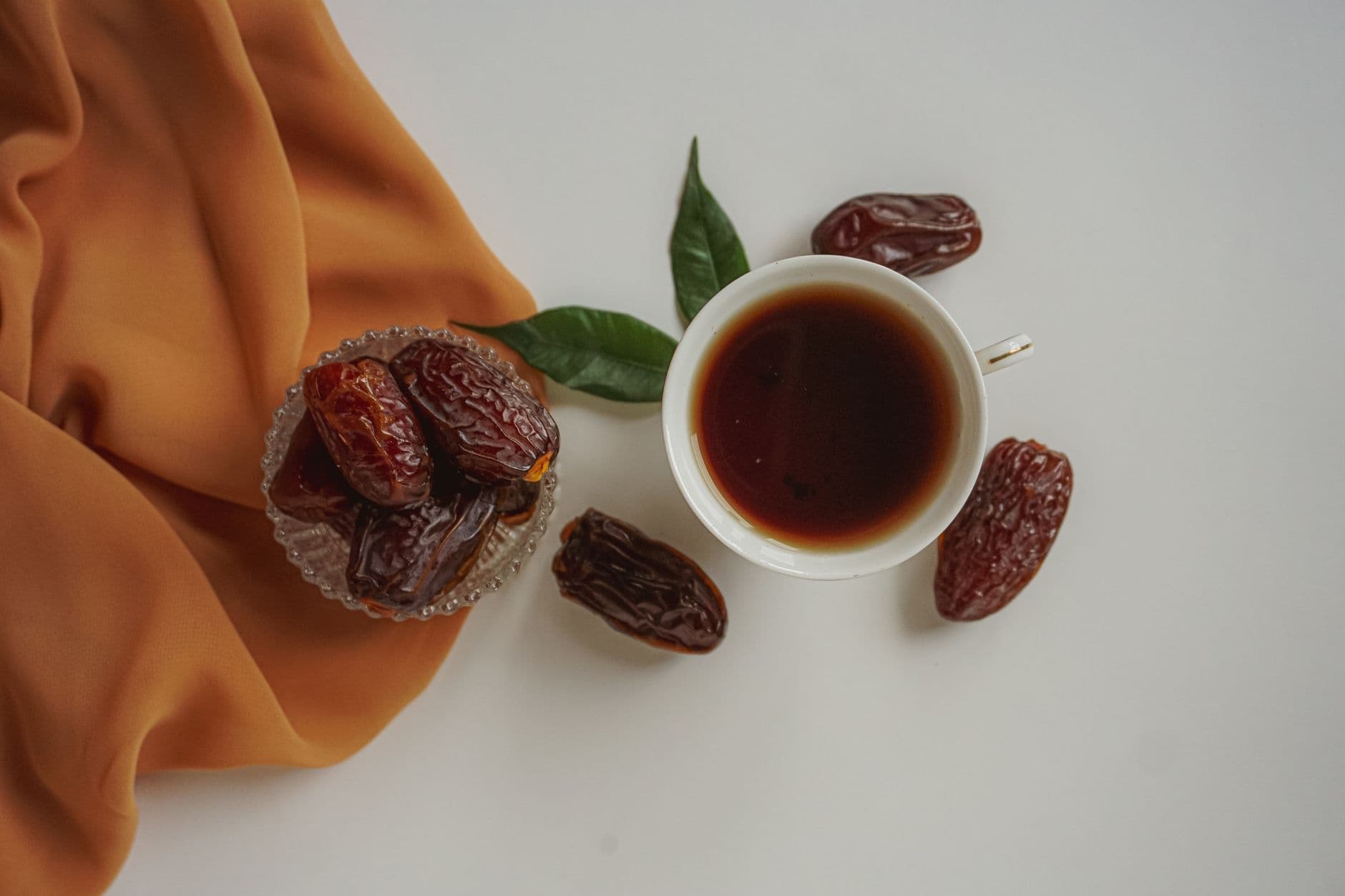
Dates during pregnancy and daily safety
Dates during pregnancy are completely safe and beneficial as part of your balanced diet throughout pregnancy if you do not have gestational diabetes. According to the UK National Health Service (NHS), dried fruits like dates are a safe, nutritious choice within the recommended daily fruit and vegetable intake of at least 5 varied portions a day. Dates give you natural fiber that helps prevent common pregnancy constipation, alongside iron and potassium.
The key always lies in moderation and watching your daily portion size. Because dates are dried fruit, their natural sugars and calories are more concentrated compared to fresh fruit. Medical dietary guidelines therefore count one tablespoon of dried fruit, roughly 1 to 3 small dates, as one full fruit portion within your daily meals.
Source: NHS
Dates during pregnancy in the first months
Dates during pregnancy in the first months are safe and do not cause miscarriage or early labor as commonly rumored among mothers. In your first, second, and third months, your body needs steady energy and dietary fiber to ease sluggish digestion caused by shifting hormones. No medical evidence prevents you from eating dates in the first trimester as long as your blood sugar levels remain normal.
If you experience morning sickness in the early months, you might find dates too sweet on an empty stomach. You can then stick to 1 or 2 dates paired with a handful of unsalted nuts or a cup of yogurt. Pairing dates with protein or healthy fats slows sugar absorption into your bloodstream and prevents a sudden energy crash.
Always wash dates thoroughly with cold water before eating them, especially soft or unpackaged varieties. According to the NHS, all fruit must be washed carefully to remove any soil traces that could carry parasites or bacteria harmful during pregnancy.
Source: NHS
Dates during pregnancy from month four to eight
Eating dates in moderation from the fourth through the eighth month helps support your iron stores and relieve chronic constipation. According to NHS hospital nutrition leaflets, dates are listed among dried fruits rich in plant-based iron, which supports red blood cell production and oxygen transport to your baby. Your body's need for iron rises in the fifth and sixth months as fetal growth accelerates and your blood volume expands.
Between weeks 24 and 28 of pregnancy, around late month six and early month seven, your doctor will typically order a glucose tolerance test. If the test shows gestational diabetes, you will need to adjust your date intake immediately or swap them for lower-sugar fruits. In the eighth month, you can continue enjoying a small daily portion before moving to ninth-month amounts aimed at birth preparation.
| Pregnancy stage | Safety status without gestational diabetes | Nutritional goal and approximate amount |
|---|---|---|
| First months (months 1 to 3) | Completely safe | 1 to 3 dates daily for energy and constipation relief with water |
| Middle months (months 4 to 8) | Safe alongside glucose screening | 1 to 3 dates paired with a vitamin C source to support iron absorption |
| Ninth month (from week 36 or 38) | Safe and supported by clinical studies | 6 to 7 dates daily to support cervical ripening and ease labor |
Source: PubMed · PMC (National Library of Medicine)
Dates during pregnancy in the ninth month and easing labor
Dates during pregnancy in the ninth month are linked to improved cervical ripening and a reduced need for labor induction during the final four weeks of pregnancy. Cervical ripening is the natural process where the cervix softens, shortens, and begins to open in preparation for vaginal birth. According to a clinical study published on PubMed by researcher O. Al-Kuran and colleagues, eating 6 date fruits daily during the last 4 weeks before labor significantly reduced the need for labor induction or augmentation.
A systematic review and meta-analysis published on the National Library of Medicine (PMC), covering clinical trials with sample sizes of 89 to 210 participants, confirms that eating dates shortened the active phase of labor and improved the Bishop score measuring cervical readiness. In those studies, mothers ate 6 to 7 dates per day, roughly 70 to 80 grams, starting between week 36 and week 38 of pregnancy until labor signs began, with no side effects reported across any included trials.
However, the same systematic review notes that eating dates did not change cesarean section rates or the total combined duration of the first, second, and third stages of labor. In short, eating dates in the ninth month helps prepare your body for a smoother, spontaneous start to labor, but it does not replace medical care or your doctor's evaluation of fetal position and pelvic adequacy.
Source: PubMed · PMC (National Library of Medicine)
Are dates beneficial in pregnancy and how to get their nutritional value
The direct answer to whether dates are beneficial in pregnancy is yes, as they combine fiber, plant iron, and minerals in an easily digested snack. For your body to absorb the iron in dates efficiently, you need to pay attention to how you pair your daily meals and drinks. According to pregnancy anemia nutrition leaflets from NHS hospitals, vitamin C helps your body absorb plant-based iron, while caffeinated drinks block that absorption.
- Pair dates with a vitamin C-rich source in the same snack, such as a small orange or a handful of strawberries, to boost iron absorption.
- Leave at least a 1-hour gap between eating dates and drinking tea or coffee, as they significantly reduce how much iron your body absorbs.
- Drink 8 to 10 glasses of fluid daily when increasing fiber and dried fruits like dates so the fiber works effectively against constipation.
- Mix two chopped dates with a handful of unsalted almonds or walnuts for a balanced snack that keeps you full longer.
Source: University Hospitals Coventry and Warwickshire NHS Trust
Can dates be harmful in pregnancy and when to reduce them
Dates become unsuitable for you if you have gestational diabetes or type 2 diabetes, or if eaten in excessive amounts that rapidly spike blood sugar. According to pregnancy glucose management guidelines from Cambridge University Hospitals NHS Foundation Trust, dried fruits including dates are classified among refined or fast-acting carbohydrates best avoided or strictly limited with gestational diabetes. The concentrated natural sugars in dates quickly convert to glucose in the bloodstream, raising post-meal sugar readings.
Even if your dietitian permits dried fruit while managing diabetes in pregnancy, a single portion is capped at one tablespoon and should not be eaten alongside main meals or late in the evening. According to NHS hospital guidelines for diabetes in pregnancy, allowed fruit portions are best eaten between meals rather than with them, while avoiding carbohydrates and sugars after 8 PM to keep fasting blood glucose balanced the next morning.
Source: Cambridge University Hospitals NHS Foundation Trust · Sandwell and West Birmingham NHS Trust
What's common
- Pair dates with a vitamin C-rich source in the same snack, such as a small orange or a handful of strawberries, to boost iron absorption.
- Leave at least a 1-hour gap between eating dates and drinking tea or coffee, as they significantly reduce how much iron your body absorbs.
- Drink 8 to 10 glasses of fluid daily when increasing fiber and dried fruits like dates so the fiber works effectively against constipation.
- Mix two chopped dates with a handful of unsalted almonds or walnuts for a balanced snack that keeps you full longer.
When to call a doctor now
Dates are a safe everyday food, but contact your doctor for advice if you notice any of the following signs after eating them or during your third trimester:
- Repeated home blood glucose readings above 7.8 mmol/L one hour after meals if you have gestational diabetes, per target ranges in NHS guidelines.
- Regular, painful uterine contractions before reaching week 37 of pregnancy.
- Persistent extreme thirst, unusual frequent urination, or severe fatigue that may point to undiagnosed high blood sugar in pregnancy.
Preparing for the ninth month or tracking your daily symptoms?
Use the contraction timer and symptom and weight logs in the Nawah app to follow your body's preparation for birth week by week, or ask the Nawal assistant in Arabic or English about any food on your mind.
Get NawahCommon questions
Do dates in the first months of pregnancy cause miscarriage?
No, dates do not cause miscarriage in the first months of pregnancy. According to the NHS, dried fruits are a safe part of a healthy pregnancy diet, and you can safely eat 1 to 3 dates daily as long as you do not have gestational diabetes.
What is the benefit of dates for a pregnant woman in the ninth month?
Eating 6 to 7 dates daily starting from week 36 or 38 helps ripen the cervix and increases the likelihood of spontaneous labor. Clinical studies published on PubMed and PMC show it reduces the need for labor induction and shortens the active phase of labor.
What is the truth about date water for pregnant women?
There are no specific medical recommendations for date water in pregnancy, and eating the whole date is better for your body because it retains the intact fiber that prevents constipation and slows sugar absorption. According to NHS guidelines, sugary drinks and juices should be limited because they raise blood sugar rapidly.
Are dates safe in the second or third month of pregnancy?
Yes, dates are safe in the second and third months of pregnancy. Dates provide quick energy and natural fiber that eases early constipation, and eating 2 to 3 dates a day with plenty of water is sufficient.
What is the benefit of dates in the fifth and sixth months of pregnancy?
In the fifth and sixth months, dates supply your body with plant iron, fiber, and potassium. According to NHS nutrition leaflets, dates are among the dried fruits that help prevent iron-deficiency anemia when eaten alongside vitamin C sources.
Are dates harmful for a pregnant woman with gestational diabetes?
Yes, dates can raise blood glucose levels quickly due to their concentrated natural sugars. NHS hospital guidelines for gestational diabetes recommend avoiding dried fruits like dates or swapping them for a small portion of low-glycemic fresh fruit such as berries or an apple.
When should I start eating dates to ease labor, in the eighth or ninth month?
The portion aimed at easing labor starts in the ninth month, specifically from week 36 or week 38 of pregnancy according to clinical trials published in the National Library of Medicine (PMC). In the eighth month, stick to the moderate dietary portion of 1 to 3 dates daily.
Sources
- Have a healthy diet in pregnancyNHS · retrieved 2026-10-27
- The effect of late pregnancy consumption of date fruit on labour and deliveryPubMed · retrieved 2026-10-27
- Effects of date fruit (Phoenix dactylifera L.) on labor and delivery: a systematic review and meta-analysisPMC (National Library of Medicine) · retrieved 2026-10-27
- Dietary advice for iron deficiency anaemiaUniversity Hospitals Coventry and Warwickshire NHS Trust · retrieved 2026-10-27
- Diabetes & Pregnancy: top tips for optimising glucose levelsCambridge University Hospitals NHS Foundation Trust · retrieved 2026-10-27
- Dietary advice for the management of diabetes during pregnancySandwell and West Birmingham NHS Trust · retrieved 2026-10-27
This guide is general information, not medical advice. It does not replace a doctor, and it knows nothing about your particular pregnancy. If something feels wrong, contact your doctor instead of waiting for the next scheduled visit.